New York City, NY
New York City, NY
Liminal Library: Continuum
In collaboration with M.Steinthal


This project explores the way we interact with knowledge and curiosity as a basic and fundamental part of the human experience. It challenges societal infrastructure, measurement of time, rules and boundaries, and how each of these influence audience behaviour and daily routines, identifying the daily clock operates to keep societies moving at a specific rhythm and pace.
The library deconstructs these boundaries, and in doing so seeks to provoke natural curiosity and reflection through three core human states: curiosity, reflection, and regeneration.
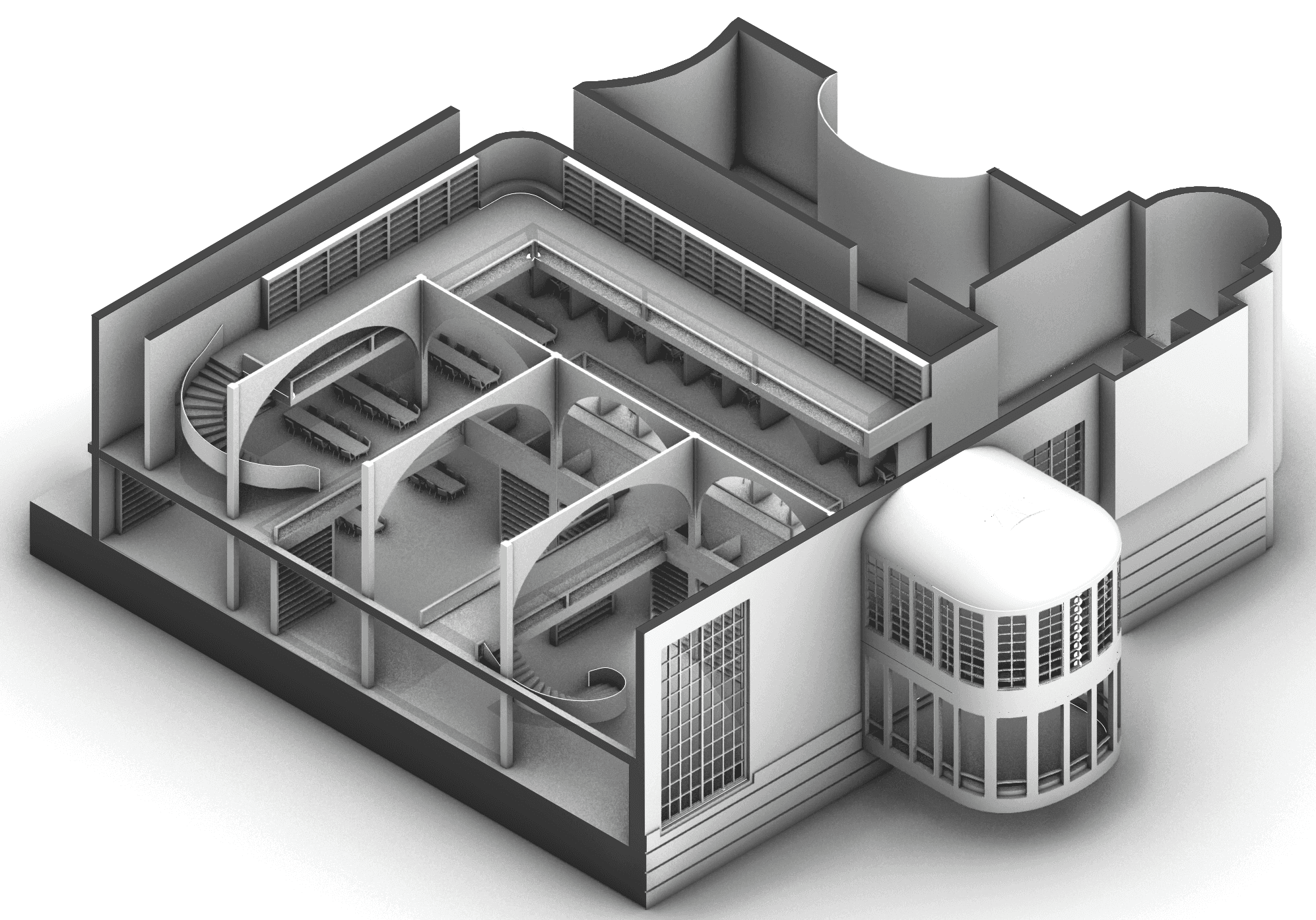
Designed on the site of the Art Gallery of New South Wales (Sydney, Australia), the re-imagination of the existing building is built off the integration of three core zones that each promote curiosity, reflection and regeneration. Spaces intertwine with one another, and spatial paths were made to reflect the fluidity of the human body in its base form.
This project explores the way we interact with knowledge and curiosity as a basic and fundamental part of the human experience. It challenges societal infrastructure, measurement of time, rules and boundaries, and how each of these influence audience behaviour and daily routines, identifying the daily clock operates to keep societies moving at a specific rhythm and pace.
The library deconstructs these boundaries, and in doing so seeks to provoke natural curiosity and reflection through three core human states: curiosity, reflection, and regeneration.
Designed on the site of the Art Gallery of New South Wales (Sydney, Australia), the re-imagination of the existing building is built off the integration of three core zones that each promote curiosity, reflection and regeneration. Spaces intertwine with one another, and spatial paths were made to reflect the fluidity of the human body in its base form.


Curiosity
Evolution has given humans an innate drive to learn and explore, one that has the power to physically alter brain chemistry.
The world as it has existed since humans has done so under the guidance of curiosity, and gives us intellectual humility, the ability to connect, and innovation.
Zones for curiosity exist in open and closed library spaces, allowing users to explore different experiential environments beyond research materials.
Curiosity
Evolution has given humans an innate drive to learn and explore, one that has the power to physically alter brain chemistry.
The world as it has existed since humans has done so under the guidance of curiosity, and gives us intellectual humility, the ability to connect, and innovation.
Zones for curiosity exist in open and closed library spaces, allowing users to explore different experiential environments beyond research materials.
Reflection
Reflection and memory is essential to being able to understand meanings and learn from mistakes, however humans' ability to think about their own thoughts, emotions, and experiences (metacognition / self-reflection) is what allows us to excel.
It is a core pillar of the human experience to seek both physical reflection and internal reflection, and is responsible for how we attach meaning and connection with the entire world around us.
Zones for reflection exist in small courtyards and transition zones, scattered strategically throughout the building. These semi-indoor spaces include outdoor quiet courtyards, and indoor glass structures.
Reflection
Reflection and memory is essential to being able to understand meanings and learn from mistakes, however humans' ability to think about their own thoughts, emotions, and experiences (metacognition / self-reflection) is what allows us to excel.
It is a core pillar of the human experience to seek both physical reflection and internal reflection, and is responsible for how we attach meaning and connection with the entire world around us.
Zones for reflection exist in small courtyards and transition zones, scattered strategically throughout the building. These semi-indoor spaces include outdoor quiet courtyards, and indoor glass structures.
Regeneration
The state of rest and regeneration is an active state for the brain to repair cellular damage, clear metabolic waste, and solidify memories. It is essential to maintaining critical thinking, preserving the body and its function, and drive intrinsic curiosity,
It is a state that promotes the connection between unrelated ideas, allowing the subconscious mind to process ideas and link unrelated concepts, whilst also eliminating mental clutter, and resets the brains natural curiosity.
Zones for regeneration exist as rituals, from bathing and bathhouses, sleeping pods, eating zones, and dark rooms.
Regeneration
The state of rest and regeneration is an active state for the brain to repair cellular damage, clear metabolic waste, and solidify memories. It is essential to maintaining critical thinking, preserving the body and its function, and drive intrinsic curiosity,
It is a state that promotes the connection between unrelated ideas, allowing the subconscious mind to process ideas and link unrelated concepts, whilst also eliminating mental clutter, and resets the brains natural curiosity.
Zones for regeneration exist as rituals, from bathing and bathhouses, sleeping pods, eating zones, and dark rooms.


The project underwent 4 months of research, iterative processes, prototyping and concept modelling. These processes mapped the effects of certain design choices, understanding how they alter user behaviour, emotion and experience, and allowed us to create a web of integrated spaces that promote three core human functions.
The project underwent 4 months of research, iterative processes, prototyping and concept modelling.
These processes mapped the effects of certain design choices, understanding how they alter user behaviour, emotion and experience, and allowed us to create a web of integrated spaces that promote three core human functions.


Prototypes and concepts were iterated and analysed, and then dissected based on core spatial and experiential fundamentals:
Vectors (private vs semi-private vs public spaces)
Height and expansiveness (does it feel cold and empty or open, vibrant, and exciting?)
Busyness (how many people does the space comfortably accommodate and promote?)
Scale (are there moments which have different spatial scale (e.g. pods or nooks) and how does it add and detract from the overall spatial experience?)
User journey (what is the physical journey the audience uses to move through the space?)
Audience narrative (what is the emotional narrative that the audience feels as they move through the space and why?)
Purpose (what is the purpose of this space and how do these choices in combination achieve or challenge that purpose?)
Prototypes and concepts were iterated and analysed, and then dissected based on core spatial and experiential fundamentals:
Vectors (private vs semi-private vs public spaces)
Height and expansiveness (does it feel cold and empty or open, vibrant, and exciting?)
Busyness (how many people does the space comfortably accommodate and promote?)
Scale (are there moments which have different spatial scale (e.g. pods or nooks) and how does it add and detract from the overall spatial experience?)
User journey (what is the physical journey the audience uses to move through the space?)
Audience narrative (what is the emotional narrative that the audience feels as they move through the space and why?)
Purpose (what is the purpose of this space and how do these choices in combination achieve or challenge that purpose?)
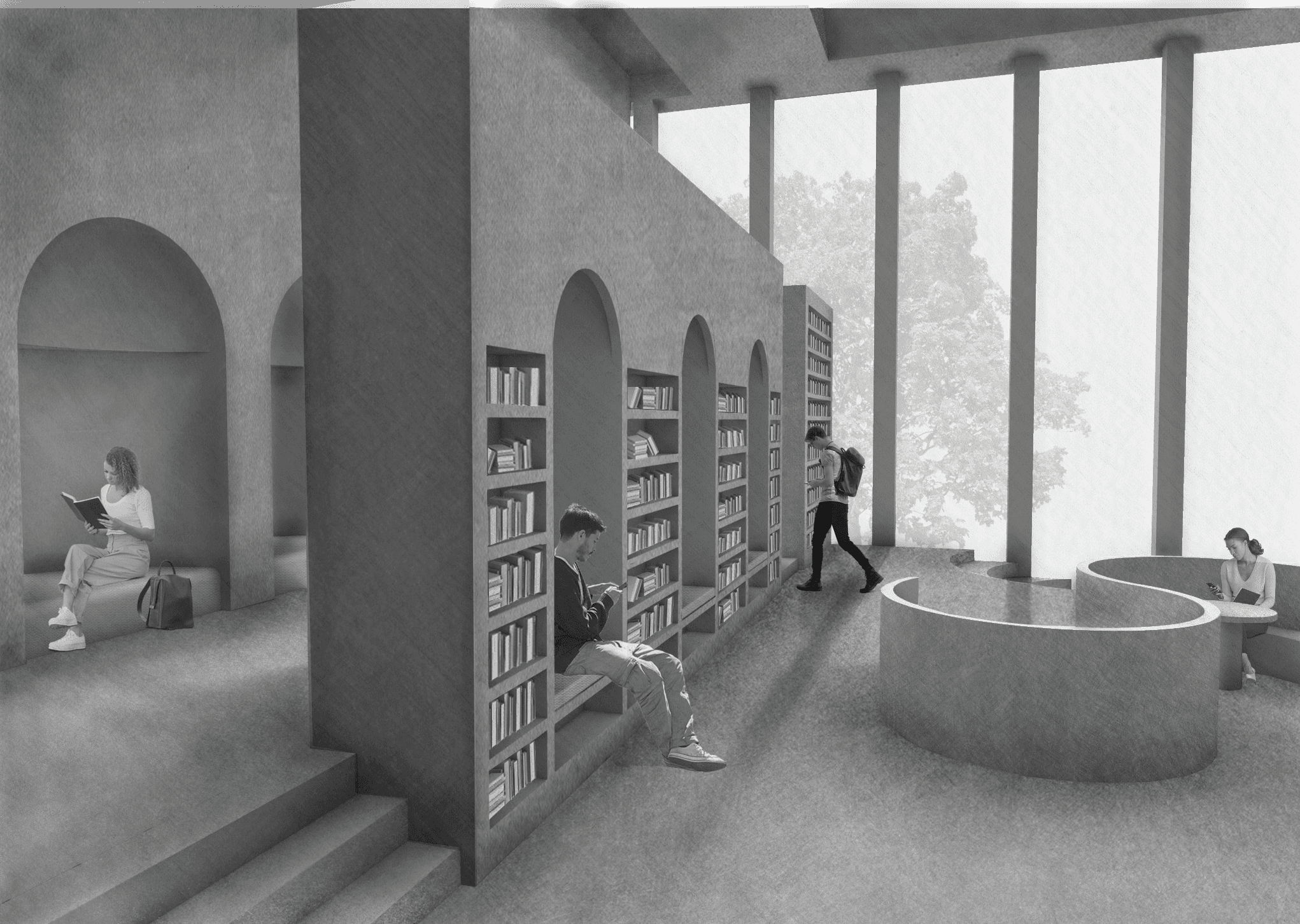
Prototypes and concepts were iterated and analysed, and then dissected based on core spatial and experiential fundamentals:
Vectors (private vs semi-private vs public spaces)
Height and expansiveness (does it feel cold and empty or open, vibrant, and exciting?)
Busyness (how many people does the space comfortably accommodate and promote?)
Scale (are there moments which have different spatial scale (e.g. pods or nooks) and how does it add and detract from the overall spatial experience?)
User journey (what is the physical journey the audience uses to move through the space?)
Audience narrative (what is the emotional narrative that the audience feels as they move through the space and why?)
Purpose (what is the purpose of this space and how do these choices in combination achieve or challenge that purpose?)





Poche collage techniques were used initially to dissect and deconstruct existing educational institutions: modern, traditional, cross-cultural, and historic.
These were overlayed onto the existing site of the Art Gallery of New South Wales, to map different user journeys and pathways through different spatial configurations.
Poche collage techniques were used initially to dissect and deconstruct existing educational institutions: modern, traditional, cross-cultural, and historic.
These were overlayed onto the existing site of the Art Gallery of New South Wales, to map different user journeys and pathways through different spatial configurations.